
Swedish National Election Studies
The Swedish National Election Studies Program (SNES) is based at the Department of Political Science at the University of Gothenburg and have been a cornerstone of Swedish election research since the early 1950s. Through empirical studies, SNES examines how Swedish democracy functions – how people vote, why elections produce the results they do, and how public opinion changes over time. In connection with general elections, the programme studies the key actors of democracy: political parties, the media, and voters. Through research and public communication, SNES contributes knowledge that helps strengthen democracy in society.
The Swedish National Election Studies Programs’ involvement in CORS enables long-term participation in the cross-national research collaboration The Comparative Study of Election Surveys (CSES). Sweden has been an active member of CSES since 1995, and it is SNES’s most important international collaboration. CSES brings together more than 200 researchers from 60 countries and provides a common framework for comparative analyses of voter behaviour and electoral institutions across democratic systems worldwide. The cooperation is based on the inclusion of common survey questions in election studies conducted in many countries across different parts of the world, enabling comparative analyses of voting behavior across diverse contexts and electoral systems (cses.org).


Swedish National Election Studies on social media
Studies
Election studies
The election studies are conducted in connection with national elections in Sweden. Their purpose is to study voters’ perceptions, attitudes, and behaviour in the context of democratic elections.
Since 1956, election studies have been carried out at every parliamentary election, and since 1957 at all national referendums. These datasets contain information on how the Swedish population has reasoned and voted on issues such as occupational pensions, nuclear power, EU membership, and the euro.
Studies of elections to the European Parliament have been part of the series since 1995. These surveys include general questions about politics as well as more detailed questions on attitudes towards the European Union and elections to the European Parliament.
Since 1995, the Swedish National Election Studies have also been part of the international research collaboration The Comparative Study of Election Surveys (CSES). Election research teams around the world cooperate to ensure, among other things, that identical survey questions are asked in multiple countries, enabling the study and comparison of voter behaviour across different institutional contexts.


Data from the national election studies
The national election studies are conducted in connection with parliamentary, European Parliamentary and referendum elections and the data series goes back to 1956. To access the data, you need to submit a request through the Swedish National Data Service. Follow the links below to access each collection on researchdata.se.
Request data from the national election studies – Parliamentary elections.
Request data from the national election studies – European parliament elections.
Request data from the national election studies – Referendums.
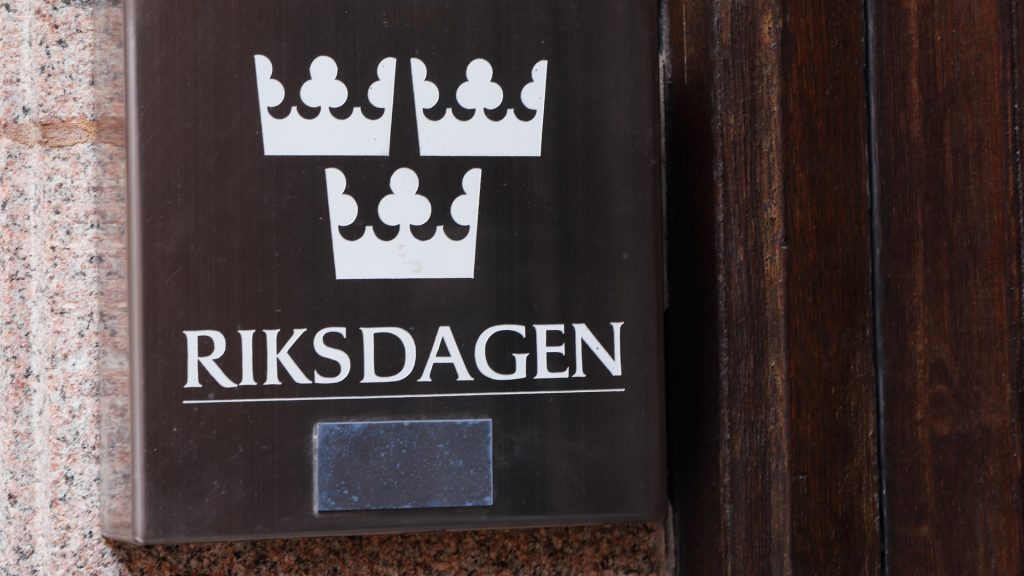
The Riksdag MP Survey
The Swedish National Election Studies Program is responsible for conducting world-leading surveys targeting politicians.
The Riksdag Survey has been carried out on twelve occasions (1969, 1985, 1988, 1994, 1996, 1998, 2002, 2006, 2010, 2014, 2018, and 2022), making it the world’s longest-running time series for the study of elected parliamentarians. The fact that the Riksdag Survey is conducted every parliamentary term provides a unique opportunity to study how the Swedish parliament has developed over time in terms of factors such as the distribution of opinions, views on democracy, and representational roles.
In addition to being reported in a large number of scholarly articles and theses, the results of each survey wave have also been published in the form of a book (in Swedish) on each occasion. Read more about the Parliamentary Survey at gu.se.

Swedish Parliamentary Candidate Study
The Comparative Candidate Survey (CCS) is an international research project that examines the interaction between candidates, political parties, and voters during election campaigns.
Voters in Western democracies make their electoral choices increasingly late and have also become more volatile, which makes individual candidates a more important object of study. Research on candidates’ activities, attitudes, and beliefs has developed into a distinct field of study, and researchers from different countries have established a collaboration to compare developments across different contexts.
The CCS is conducted through a common survey administered to parliamentary candidates in different countries following national elections. The questions primarily concern the election campaign, but also cover ideology, democracy, and representation.
The project was launched in 2006 and has since been carried out in several waves. The Swedish National Election Studies Program has participated since the beginning, with surveys conducted in connection with the elections in 2010, 2014, 2018, and 2022.
Read more about the Comparative Candidate Survey on the project website, comparativecandidates.org
Exit polls (SVT/VALU)
Since 1991, researchers at the Swedish National Election Studies Program have been involved in the design and analysis of Sveriges Television’s recurring exit polls conducted in connection with elections and referendums.
Sveriges Television’s exit polls (SVT/VALU) are unique in an international perspective and have been carried out in direct connection with all national elections, European Parliament elections, and referendums since 1991. Surveys of voters have been distributed and collected at selected polling stations as well as at early voting locations.
Key findings on Swedish voting behaviour have been presented during Sveriges Television’s election night coverage immediately after the polling stations have closed. The exit polls deepen and structure the lively post-election debates about election outcomes. VALU provides rapid insights into how different groups of voters have voted and which issues have been important for voters’ party choices.
Since its inception, SVT/VALU has been a collaboration between Sveriges Television, researchers from the Royal Institute of Technology (KTH), and the Swedish National Election Studies Program at the Department of Political Science, University of Gothenburg. A large number of individuals have contributed to the exit poll work. Hans Hernborn (SVT), Per Näsman (KTH), and Sören Holmberg (GU) have held leading roles in the collaboration over the years. More information about the exit polls is available at the University of Gothenburg website (gu.se).
Questionnaires
The questionnaires for the exit polls are compiled on the University of Gothenburg website. There you will find more information about the surveys and the questions that have been asked, and you can also perform free-text searches for specific questions.

Access to Data
Data from the exit polls are made freely available as soon as possible after each election. To gain access to the data, a request must be submitted via the Swedish National Data Service (SND). Follow the link below to access the collection on researchdata.se.
Contact
Please feel free to contact us using the contact details below.
E-mail: valforskning@pol.gu.se
Phone: 031 786 6891
Visiting address: Sprängkullsgatan 19, 411 23 Göteborg
Mailing address: Box 711, 405 30 Göteborg
